Jorg Voss – Biography
Jorg Voss’s involvement with music spans more than eight decades, beginning with a bamboo flute he made as a ten-year-old in postwar Germany.
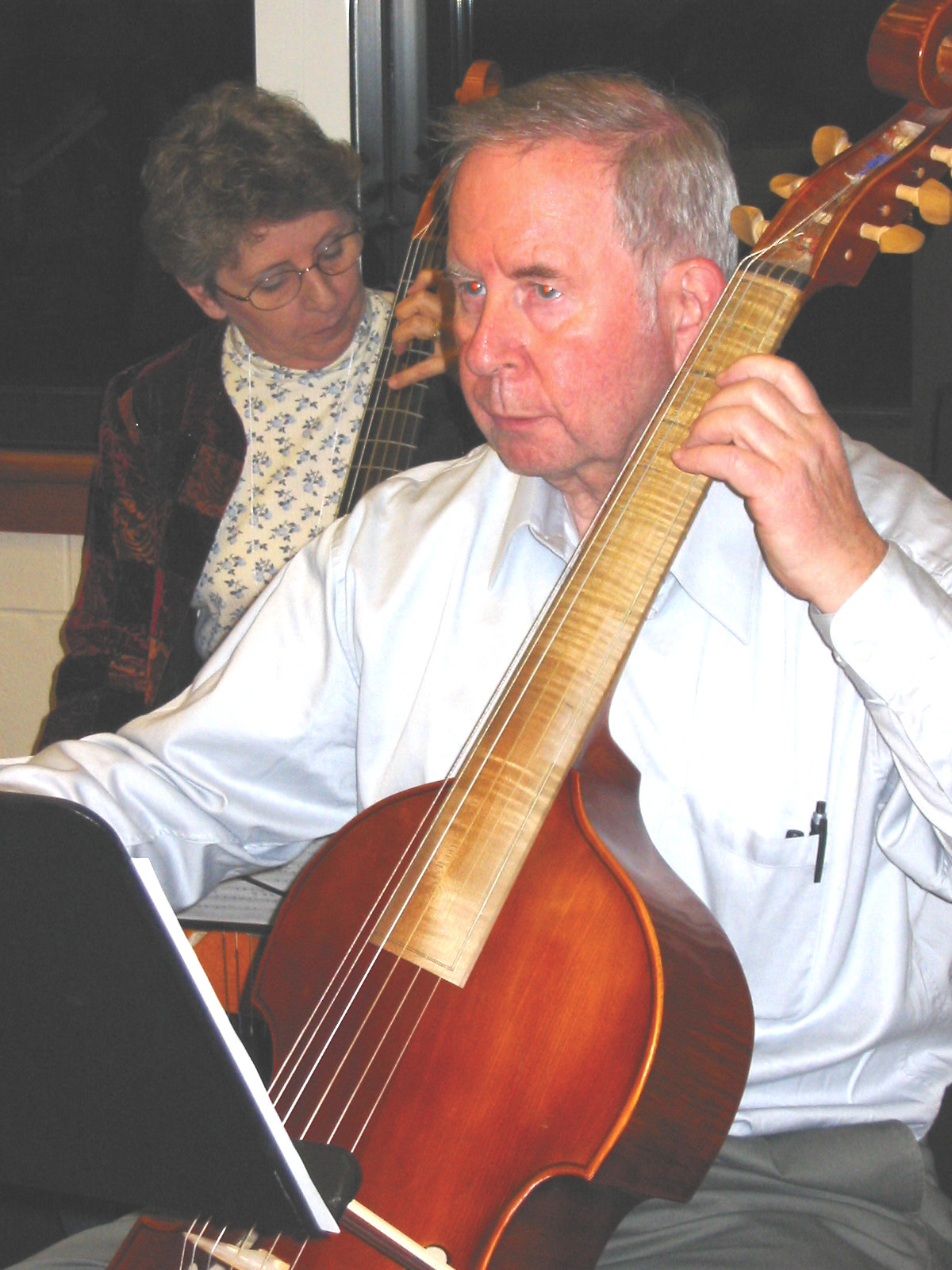
Born in Germany in 1936, Jorg joined a church youth music group in East Germany in 1946, shortly after World War II. One of his earliest musical experiences was making his own bamboo flute from a piece of scrap material.
After his family escaped to West Germany in 1947, Jorg was introduced to the Youth Music Movement of postwar Germany. The movement emphasized choral singing, folk music from around the world, and the use of affordable instruments such as recorders and Orff percussion instruments. It also encouraged the performance of Renaissance and Baroque music as well as contemporary compositions.
Prominent leaders of the movement, including Gottfried Wolters, Willi Träder, and Egon Kraus, published and recorded its music and produced broadcasts for use in the public school system. Through these experiences, Jorg developed a lifelong interest in the recorder, guitar, choral music, choir directing, and music arranging.
He received early instruction in harmony, took a short course in composition, and began creating arrangements for both choral and instrumental ensembles.
The 1960s also brought practical considerations. Jorg chose an engineering career to, as he put it, “bring bread to the table.” His studies brought him to the United States in 1959, where he pursued his technical career until retiring in 1994.
Music nevertheless remained a constant part of his life. Over the years, he sang in choirs, played recorder, and directed musical groups in Wisconsin, California, Germany, Arkansas, and Georgia. In later years, he added the viola da gamba to his instrumental repertoire.
Jorg describes his musical interests as “romantic” in the broad sense that he is particularly drawn to the lyrical and singable qualities of music. He also has a strong interest in traditional and ethnic music from many cultures, appreciating the variety they bring through distinctive melodic lines, harmonies, and rhythmic patterns.
His compositions generally employ traditional harmonies, while some incorporate modal writing and compositional techniques drawn from the Renaissance and Baroque periods. His love of polyphony is evident throughout much of his work, with particular attention given to making each individual voice musically interesting and important.
Rhythmic approaches vary from piece to piece. Syncopation and unusual time signatures occasionally add an element of challenge, particularly in sight-reading, while contributing to the individual character of the music.
Jorg F. Voss, 2012

